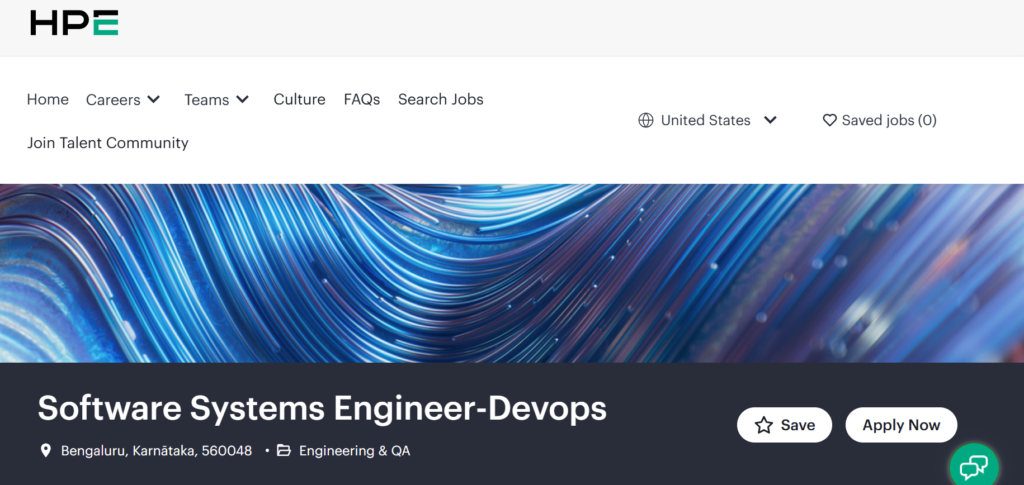
Looking to build your career in Cloud, DevOps, and Distributed Systems? 🌟 Hewlett Packard Enterprise (HPE) is hiring Software Systems Engineer – DevOps for its Bangalore office. This opportunity is ideal for B.Tech and M.Tech graduates with 0–2 years of experience, including freshers with strong academic projects or internships. If you’re passionate about cloud-native technologies, automation, Kubernetes, Infrastructure as Code, and modern DevOps practices, this role offers an excellent platform to work on enterprise-scale infrastructure and cutting-edge software solutions.
📌 Job Overview
🏢 Company: Hewlett Packard Enterprise (HPE)
💼 Role: Software Systems Engineer – DevOps
📍 Location: Bangalore, India
🎓 Qualification: B.Tech / M.Tech (Computer Science or related field)
💼 Experience: 0–2 Years
🕒 Employment Type: Full-Time
🏢 About HPE
Hewlett Packard Enterprise (HPE) is a global leader in enterprise technology, cloud computing, networking, storage, and AI-driven infrastructure solutions. Serving organizations across healthcare, finance, telecommunications, manufacturing, and government sectors, HPE helps businesses modernize IT environments through hybrid cloud, edge computing, high-performance computing, and intelligent automation. The company invests heavily in innovation, research, and next-generation technologies, providing engineers with opportunities to work on distributed systems, cloud platforms, AI infrastructure, and enterprise software used by organizations worldwide. HPE’s collaborative engineering culture and continuous learning environment make it an excellent destination for aspiring DevOps and Cloud Engineers.
🌟 Why This Role Is Great for Freshers
This role provides an outstanding opportunity for graduates to enter the world of DevOps and cloud-native engineering. Instead of focusing on routine development tasks, you’ll learn how modern enterprise software is deployed, monitored, automated, and scaled across distributed infrastructure. You’ll gain practical exposure to Kubernetes, Docker, Infrastructure as Code, CI/CD pipelines, observability, and cloud automation while working alongside experienced engineers. The combination of software development and operations knowledge makes this role an excellent foundation for careers in DevOps Engineering, Site Reliability Engineering (SRE), Cloud Engineering, Platform Engineering, and Infrastructure Automation.
💼 Roles & Responsibilities
- Develop high-quality software using modern programming languages.
- Build and automate deployment pipelines for cloud-native applications.
- Develop automated test cases and integrate them into CI/CD workflows.
- Design software with scalability, observability, and maintainability in mind.
- Work with Kubernetes, Docker, and virtualization technologies.
- Build REST or gRPC-based services.
- Participate in architecture discussions and design reviews.
- Monitor application health and troubleshoot production issues.
- Collaborate with cross-functional Agile teams.
- Continuously improve deployment automation and infrastructure reliability.
🎯 Skills Required
- Python, Golang, Java, C, or C++.
- Object-Oriented Programming.
- Distributed Systems fundamentals.
- Cloud Native Architecture.
- Kubernetes.
- Docker.
- REST APIs and gRPC.
- Infrastructure as Code (Terraform, Helm, Ansible).
- CI/CD concepts.
- Git and GitHub.
- Linux fundamentals.
- Microservices Architecture.
- Prometheus and Grafana basics.
- Cassandra, RabbitMQ, or Elasticsearch (preferred).
- VMware, KVM, or OpenStack exposure.
- Strong debugging and analytical skills.
- Basic understanding of AWS, Azure, or Google Cloud.
- Interest in AI/ML, GitOps, and MLOps concepts is a plus.
💰 Expected Salary Range
HPE has not officially disclosed the compensation for this role. Based on similar Software Systems Engineer and DevOps openings in the product engineering industry, candidates may expect:
- Freshers (0–2 Years): ₹8 LPA – ₹15 LPA
Additional benefits may include: - Performance bonuses.
- Comprehensive health insurance.
- Hybrid work and wellness benefits (role dependent).
- Learning and certification reimbursement.
- Global engineering collaboration.
- Career development programs.
- Employee stock and recognition programs (where applicable).
🧩 Expected Interview Rounds
Candidates may generally expect the following recruitment process:
1️⃣ Resume Screening
- Academic background.
- Technical projects.
- Relevant internships.
2️⃣ Online Assessment
- Programming.
- Data Structures.
- Aptitude.
- Problem-solving.
3️⃣ Technical Interview
- Programming language fundamentals.
- OOP concepts.
- Operating Systems.
- Computer Networks.
- Linux basics.
4️⃣ DevOps & Cloud Interview
- Kubernetes.
- Docker.
- CI/CD.
- REST APIs.
- Infrastructure as Code.
- Cloud concepts.
5️⃣ HR & Hiring Manager Interview
- Communication skills.
- Team collaboration.
- Learning mindset.
- Career goals.
- Cultural fit.
🚀 Preparation Tips
To maximize your chances, focus on demonstrating practical DevOps knowledge through projects rather than only theoretical understanding.
- Build and deploy a simple microservices application using Docker containers and Kubernetes on a local cluster such as Minikube or Kind.
- Learn GitHub Actions or Jenkins by creating a CI/CD pipeline that automatically builds, tests, and deploys your application after every code commit.
- Practice writing Infrastructure as Code using Terraform or Ansible to provision cloud resources and automate repetitive tasks.
- Strengthen Linux command-line skills, shell scripting, process management, networking commands, and log analysis, as these are essential for DevOps engineers.
- Understand observability by experimenting with Prometheus and Grafana to collect metrics and visualize application health.
- Revise REST API concepts, HTTP methods, status codes, authentication, and basic gRPC fundamentals through hands-on implementation.
- If possible, showcase a cloud deployment project using AWS, Azure, or Google Cloud, highlighting how you managed containers, monitoring, and automation from end to end.
📄 Resume Tips
- Keep your resume to one page with a clean ATS-friendly format.
- Highlight DevOps, Kubernetes, Docker, Python, Golang, Java, CI/CD, Terraform, REST APIs, and Linux prominently in your technical skills section.
- Include GitHub links demonstrating cloud, automation, or DevOps projects with proper documentation.
- Mention internships, hackathons, open-source contributions, or IEEE activities if applicable.
- Quantify achievements such as reducing deployment time, automating workflows, or improving application performance.
- Include certifications related to AWS, Azure, Kubernetes, Docker, Terraform, or Linux if you have completed them.
- Clearly explain your contribution to academic or personal projects instead of listing generic responsibilities.
- Carefully proofread your resume to eliminate formatting inconsistencies, grammatical errors, and outdated technologies.
📥 How to Apply?
👉 Application Link: Click Here
- Review the eligibility criteria and complete job description.
- Update your ATS-friendly resume with relevant DevOps, cloud, and programming projects.
- Submit your online application through the careers portal.
- Keep your GitHub, LinkedIn, and portfolio updated with recent work.
- Monitor your registered email regularly for assessment links and interview invitations.
- Apply as early as possible, as product-based engineering roles are highly competitive.
🚀 If you’re passionate about Cloud Computing, DevOps, Kubernetes, Automation, and building scalable enterprise software, this Software Systems Engineer – DevOps opportunity at HPE is an excellent way to begin your career with a globally recognized technology leader. Build practical projects, apply early, and take the first step toward becoming a successful DevOps Engineer!